Sunday, 3 April 2011

Parking lot birding at Point Pelee


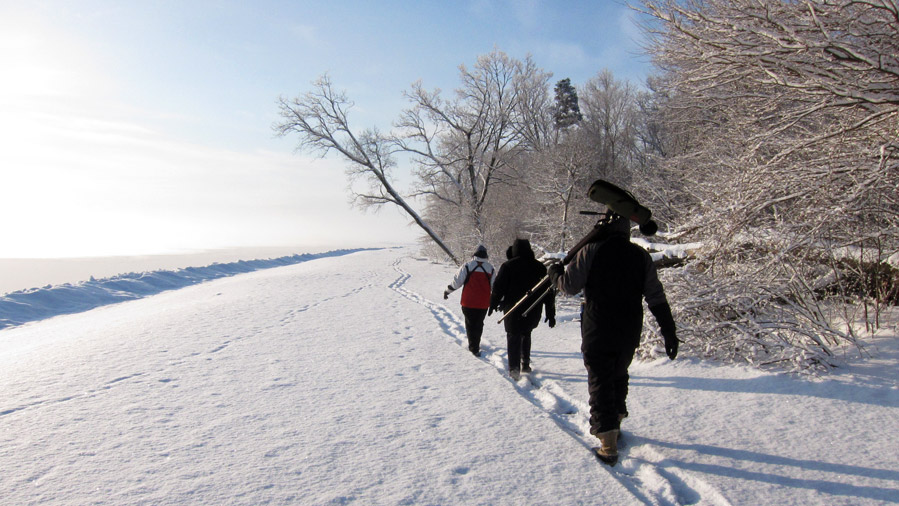
Trail to the Sparrow Field in Point Pelee National Park, 6 March 2011. The good news this spring is that the park will be brush cutting the overgrown "sparrow field" and managing it as a clearing. 


Point Pelee Parking lot in March

The snow has melted and soon Point Pelee will be attracting large numbers of birds and birders. Here are a few unusual species that I spotted in the parking lot last May.


Sunday, 13 March 2011

Poop

Australia introduced several species of dung beetles from South Africa in an effort to deal with a big poop problem, cattle dung. Australia's infamous bush fly population exploded with the introduction of cattle. There was no native Australian mammal that produced such large droppings and therefore no native beetles to feed on these large "meadow muffins". The introduced beetles eventually reduced the bush fly population by 90 percent! (I don't think I could have birded Australia when the bush fly population was at its peak. Even at 10 percent they occasionally drove me crazy)

The large number of African Elephants in Kruger National Park leave a substantial amount of poop laying about (+1,200 tons per day).  We noticed the piles of dung on the roads well before we saw our first elephant. 


In addition to the insects that specialize in this coprophilous habit there are also birds and mammals that poke around the droppings looking for tasty treats.  Here are a few we found while birding the park. 

Southern Yellow-billed Hornbills were frequently seen at elephant dung.

This female Vervet Monkey found a quick snack under a lump of elephant dung. 


Yum!  

Monday, 7 February 2011

Winter birding in Essex County

I visit Point Pelee throughout the year. There may not be as many birds present during the winter but Pelee is always good for a surprise or two and few birders visit the park at this time of year. This past Saturday we saw over 160 American Robins at the tip and on the prior trip we had 14 Bald Eagles along the East Beach.


View from the tip, January 8, 2011


The tip on February 5, 2011


A "Drift of Buntings"

On Sunday I helped banders from the Holiday Beach Migration Observatory band Snow Buntings and Horned Larks in Harrow. This is part of a project by Oliver Love who is conducting research looking to understand the cause of a 60 percent decline in the Snow Bunting population over the past 40 years.


This is a male Snow Bunting. Females have much more black in the wing. The brownish tips of the feathers will wear off by the spring and the bill will turn black. 


female Snow Bunting


The genus name of Snow Bunting is Plectrophenax. The Greek word "plektron" means a claw-like tool used to play a string instrument and it is similar to the Snow Bunting's long hind claw. Buntings banded during the winter in Southern Ontario have been relocated as breeding birds in Western Greenland.


 Horned Lark

Monday, 24 January 2011

Images from Australia


It is winter here in Ontario but mid summer in Australia. I am planning to return there later this year and I have been going through a few of my photos from past trips.  Here are a few of my favourites.


Willie Wagtails were often seen hunting insects flushed by livestock.


Apostlebirds are found in noisy parties of a dozen or so.


This noisy Sulphur-crested Cockatoo tried stealing our french fries in Royal National Park. Australia has an amazing variety of parrots. 


One of my more memorable moments in birding the interior part of northern Queensland was coming across a large flock of Red-tailed Black-Cockatoos as they slowly drifted through the open forest. 


This Southern Cassowary stuck its head through a window in order to steal fruit off the kitchen counter!


 A Tawny Frogmouth in concealment posture. There is a small chick in the nest.
----------


The bird life is spectacular but the plants, and other wildlife received a lot of attention. 


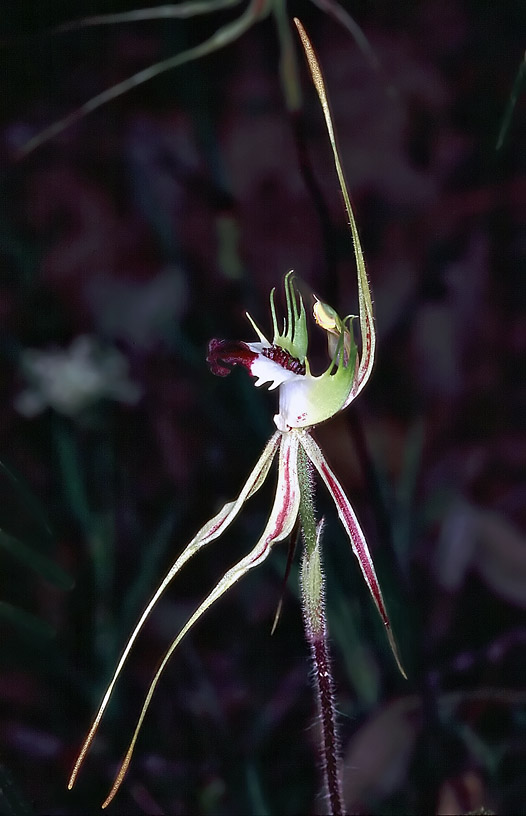
 The King Spider Orchid releases a scent that attracts male thynnid wasps. The wasps pollinate the flower when they try to mate with the flower's conspicuous lip.


A Jewel Spider (sometimes called Christmas Spider)


Cane Toads were introduced to Australia with disastrous results. They are now very common and spreading in the north-east.


Australia likes to boast about all their venomous critters but this Carpet Python, although an impressive size, was otherwise  harmless.


Driving into the beautiful Capertee Valley we spotted a lump on a post.


When I tried to touch this lump the Bearded Dragon flared its spiny hood and looked ready to bite! I didn't disturb the lizard any further.


This Shingleback Skink also gaped when approached but added to the defence posture by sticking out its blue tongue. This display is just for show as they rarely bite.


Koalas, kangaroos, wombats, gliders, possums, bandicoots and other marsupials are another distinctive feature of Australia. This Agile Wallaby was photographed in Mt. Carbine, Queensland.

Tuesday, 21 December 2010

Christmas Bird Counts

For-The-Birds Woodlot

I spent Saturday searching for birds in the vicinity of Harrow and visited sites such as the For-The-Birds Woodlot pictured above.  I have been participating in this Cedar Creek Christmas Bird Count for 24 of its 25 year history. I like this count. It started as an American Crow count due to the large number of crows that would descend on the town of Essex each winter.  At its peak ten years ago we recorded over 117,000 birds, making it the crow capital of Canada.  This year the roost failed to develop and apparently the birds have moved to the city of Chatham.  The next morning as I drove to Rondeau Provincial Park for another bird count I encountered thousands and thousands of crows along Highway 401 between the Tilbury and Chatham interchanges. 


Two Savannah Sparrows were a nice find on the count. They were feeding on the edge of a road where the snow had been scraped away from the shoulder exposing dirt, grass and a few weeds. 

Tuesday, 23 November 2010

A late hummingbird

Usually, when I see a new bird for my Ontario list I'm thrilled and happy to tell everyone about the encounter but this time that didn't happen. You see I didn't get a chance to share this sighting with my friends and only a very few people got to see the bird.  Normally when someone finds a very rare bird the sighting is posted on ONTBIRDS (or similar listserv) which gives many people a chance to look for the bird. In this case the bird departed before the identity was established.

I'm always interested in any local records of hummingbirds after mid October when most Ruby-throated Hummingbirds have left the region. While there are records of Ruby-throats as late as November 26 in Michigan there is a higher probability that a late hummingbird might be a different species.  For example a hummingbird that appeared at a feeder in Kingsville on 18 November 2007 turned out to be an adult female Rufous Hummingbird. It remained at the feeder to December 1.


Rufous Hummingbird, Kingsville, ON, November 22, 2007

On October 30, 2010 I learned of a hummingbird coming to Tom & Peggy Hurst's feeder in Cottam, ON.  After watching it for a while I decided it would be a good idea to come back the next day and get some more photos as there was talk of an Anna's Hummingbird that had just shown up in the UP of Michigan and this bird was not a typical plumaged Ruby-throat. We hoped it might be an Anna's Hummingbird but I hadn't seen an Anna's for several years and wanted to examine my photos and check some references before getting too excited. Unfortunately the bird never returned to the feeder. The few pictures that I digiscoped with a point-and-shoot camera were eventually sent away to hummingbird banders for an expert opinion. Both Sheri Williamson in Arizona and Bob Sargent in Alabama confirmed that this was an Anna's Hummingbird.


Anna's Hummingbird, Cottam, ON, October 30, 2010

This is the first record of Anna's Hummingbird for the province of Ontario. This species also appeared in Grand Maris, Michigan (2), Saylorville, Iowa and Val-d"Espoir, Quebec this fall.  The differences between female/immature plumaged Anna's and Ruby-throated are subtle. The bird above shows dingy dusky flanks with some green spotting, a straight bill and thick neck. The loral pattern is also different from Ruby-throat with a pale eyebrow, blackish spot in front of the eye and indistinct pale grayish wash behind the eye. Visible in the photo below is a distinct patch of dark spotting on the throat which is a normal pattern for female Anna's. 


In the Great Lakes region it is a good idea to keep hummingbird feeders up and supplied with sugar water until the snow flies! Species such as Rufous and Anna's Hummingbirds are quite tolerant of cold weather and capable of surviving freezing temperatures. If you are lucky enough to have a hummingbird appear at your feeder please report it immediately to your local birding hotline. My number is 519-966-5852.